Home › Guides › How to Clean Granite Countertops
CARE GUIDE
How to Clean Granite Countertops: What Toronto Homeowners Actually Need to Know
10 min read · Originally published 2020 · Last updated April 2026

Thomas Vibe Co-Founder at Stone Wizards
8+ years · 800+ countertops installed in GTA

Granite is one of the most durable countertop materials you can put in a kitchen. It handles heat, resists scratching, and with proper care, lasts generations. But granite is also natural stone, which means it behaves differently from engineered surfaces. It is porous. It absorbs liquids. And its protective sealant wears off over time.
After 8+ years fabricating and installing granite countertops across Toronto and the GTA, we see the same preventable problems: stains from unsealed surfaces, dull patches from the wrong cleaning products, and sealant breakdown from acidic cleaners. All of it avoidable with the right daily routine.
This guide covers what actually works for daily granite care, how to handle stains, what to keep away from the surface, and when and how to reseal. If you are looking for care instructions for engineered quartz instead, see our companion guide to cleaning quartz countertops.
KEY TAKEAWAYS
-
Daily granite cleaning requires only mild dish soap, warm water, and a soft cloth. The key difference from quartz: always dry the surface thoroughly because granite is porous and absorbs standing moisture
-
The protective sealant on granite wears down over time and needs reapplication every 1 to 2 years depending on kitchen usage. A simple water droplet test tells you when it is time
-
Acidic cleaners (vinegar, lemon, citrus-based products) and ammonia-based glass cleaners do not damage granite itself but degrade the sealant that protects it, leaving the stone vulnerable to stains
-
For stains that have penetrated the surface, a baking soda poultice draws the stain out of the stone over 24 to 48 hours, which is more effective than scrubbing
-
Granite handles direct heat better than any other common countertop material, but sustained high heat can weaken the sealant in that spot
Why granite cleaning is different from other surfaces
Granite is natural stone, formed deep underground over millions of years from cooled magma. Unlike engineered quartz, which is manufactured to be non-porous, granite has a natural pore structure that varies from slab to slab. Some granites are tightly grained and absorb very little. Others are more open and absorb liquids noticeably faster.
This porosity is why granite requires a protective sealant. The sealant fills the microscopic pores and creates a barrier that prevents liquids from being absorbed into the stone. When the sealant is intact, granite behaves almost like a non-porous surface: spills sit on top and wipe away cleanly. When the sealant has worn off, liquids begin to soak in, and that is when stains happen.
Understanding this one principle simplifies everything that follows: your cleaning routine protects the sealant, and the sealant protects the stone. Every cleaning decision comes down to: will this help or harm the sealant?

Daily cleaning routine
The good news: daily granite care is simple. It is not as effortless as quartz (which needs nothing beyond a wipe), but it is straightforward once you build the habit.
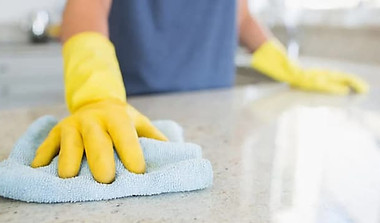
Step 1. Wipe the surface with a soft cloth or microfibre dampened with warm water and a few drops of mild dish soap. Make sure the dish soap is pH-neutral and does not contain citrus extracts.
Step 2. Rinse by wiping again with a clean damp cloth to remove all soap residue. This step matters more for granite than for most surfaces because soap film builds up over time and dulls the finish.
Step 3. Dry thoroughly with a clean, dry cloth. Do not let water sit on granite. In Toronto, municipal water contains dissolved minerals that leave white spots when they evaporate, and on granite, standing water can slowly work into the pores even through sealant.
That is the entire daily routine. Under two minutes for a standard kitchen.
The soap residue problem most guides skip
Most cleaning guides tell you to use soap and water on granite, which is correct. What they do not mention is that dish soap leaves a thin film on the surface with every use. Over weeks and months, this film accumulates into a visible dull haze that homeowners often mistake for sealant failure.
Before resealing, try cleaning the surface with isopropyl alcohol (rubbing alcohol) and water in a 50/50 mix. Spray it on, let it sit for two minutes, then wipe with a soft cloth and dry. If the granite's shine returns, the issue was soap buildup, not sealant wear. This simple diagnostic saves many homeowners an unnecessary resealing.
How often to clean
After cooking or food prep: always wipe down immediately. Raw meat, acidic foods (tomato, lemon, vinegar), and oils should never sit on granite longer than necessary.
Full surface wipe: once daily if the kitchen is used regularly. For lighter use days, a quick wipe with plain water followed by thorough drying is sufficient.
Removing stubborn stains from granite
Granite stain removal is different from other surfaces because stains on granite are often inside the stone, not on top of it. If a liquid has penetrated past the sealant and into the pores, surface scrubbing will not reach it. This is where the poultice method works.
Oil-based stains (cooking oil, grease, butter)
These are the most common granite stains we see in Toronto kitchens. Oil soaks into granite quickly and leaves a dark spot that does not respond to surface cleaning.
The poultice method: Mix baking soda with water to form a thick paste (the consistency of peanut butter). Spread it over the stain in a layer approximately 5mm thick. Cover with cling film and tape down the edges. Leave for 24 to 48 hours. The baking soda draws the oil out of the stone as it dries. Remove, rinse, and dry. Repeat if needed.
For particularly stubborn oil stains, substitute a few drops of dish soap for water when mixing the paste. The surfactant helps break down the oil within the stone.
Organic stains (coffee, wine, tea, fruit juice)
These leave lighter coloured marks (pinkish, brownish) and respond to the same baking soda poultice method. For organic stains specifically, mixing baking soda with hydrogen peroxide (instead of water) can be more effective, as the peroxide helps break down the organic compounds.
Important: Use hydrogen peroxide only on lighter coloured granite. On darker granites, peroxide can lighten the stone's natural colour in the affected area.
Hard water deposits
Common in the GTA due to Toronto's moderately hard municipal water. White crusty buildup around the sink and faucet area. A baking soda paste (3 parts baking soda to 1 part water) applied with a soft sponge and left for 5 minutes handles most mineral deposits. Rinse thoroughly and dry.
The stain that will not come out
In our experience, the stains that become permanent on granite are almost always the result of two things combined: a liquid that sat on an unsealed or poorly sealed surface for an extended period. If the sealant was intact and the spill was addressed within a reasonable time, permanent staining is rare. This is why maintaining your sealant schedule matters more than any cleaning technique.
What NOT to use on granite

The distinction with granite is important: most of these products do not damage the stone itself. Granite is extremely hard and chemically resistant. What they damage is the sealant that protects the stone. Once the sealant is compromised, the granite becomes vulnerable to stains.
Vinegar, lemon, and citrus-based cleaners
Acidic substances break down granite sealant with repeated use. A single use will not cause visible damage, but weekly use of vinegar as a countertop cleaner will noticeably degrade your sealant within months. Some cleaning blogs recommend vinegar for granite. This is incorrect and will cost you an early reseal.
Ammonia-based glass cleaners
The same issue as acidic cleaners: ammonia degrades the sealant over time. Many homeowners reach for glass cleaner out of habit because it gives an immediate streak-free shine. The short-term result looks good; the long-term effect is sealant breakdown.
Bleach and hydrogen peroxide (for daily use)
Occasional use of diluted hydrogen peroxide for stain removal is fine (see poultice method above). But routine use of bleach or peroxide as a daily cleaner will degrade the sealant and can discolour some granite varieties. Keep these for targeted stain treatment, not daily cleaning.
Abrasive pads and powders
Steel wool, rough scouring pads, and powdered abrasive cleaners can scratch the polished surface of granite. While granite is hard (6 to 7 on the Mohs scale), its polished finish is a thin layer that abrasive tools can damage. Use only soft cloths, microfibre towels, or non-abrasive sponges.
The simple rule
Your daily cleaner should be pH-neutral. If the product label mentions "cuts grease with citrus power" or "ammonia-free streak-free shine," check the ingredients carefully. Dish soap and warm water are the safest daily option. For disinfecting, 50/50 isopropyl alcohol and water works without affecting the sealant.
Sealing your granite: when and how
This is the section that separates granite care from quartz care entirely. Quartz never needs sealing. Granite does, and knowing when and how to reseal is the most important maintenance task for any granite countertop owner.
The simple rule
This is the simplest and most reliable way to check whether your granite needs resealing:
Step 1. Sprinkle a few drops of water on the granite surface in an area that gets regular use (near the sink or main prep area).
Step 2. Wait 10 to 15 minutes.
Step 3. Check the water. If it is still beaded on the surface, your sealant is intact. If the water has darkened the granite (absorbed into the stone), it is time to reseal.
Perform this test every 6 months. Most Toronto kitchens that see daily cooking use need resealing every 12 to 18 months. Lighter-use kitchens can go 2 years between reseals.
How to reseal granite (DIY-friendly)
Resealing is one of the few granite maintenance tasks that most homeowners can do themselves:
Step 1. Clean the entire surface thoroughly with isopropyl alcohol and water (50/50) to remove all soap residue and oils. Dry completely.
Step 2. Apply a penetrating granite sealer (available at most home improvement stores) according to the product directions. Most sealers are spray-on or wipe-on.
Step 3. Let the sealer absorb for the time specified on the label (typically 15 to 20 minutes).
Step 4. Wipe away excess sealer with a clean dry cloth. Buff lightly.
Step 5. Allow the sealer to cure fully before using the countertop (typically 24 hours for full cure, though light use is usually fine after a few hours).
The entire process takes about 30 minutes of active work for a standard kitchen countertop, plus curing time.
One fabricator insight on sealing
Not all granite absorbs sealer at the same rate. Darker, more tightly grained granites (like Absolute Black or Black Galaxy) are naturally denser and may need less frequent sealing. Lighter, more open-grained granites (like Kashmir White or Colonial White) are more porous and may need resealing closer to the 12-month mark. Your specific granite's absorption rate matters more than any general schedule.
When to call a professional
Most granite maintenance is DIY-friendly. Professional help is warranted in these specific situations:
Deep stains that the poultice method cannot remove. Professional stone restoration specialists have access to commercial-grade poultice compounds and techniques that go beyond what household methods can achieve. If two rounds of DIY poultice treatment have not improved the stain, professional assessment is the next step.
Etching or dull spots from acid exposure. If an acidic substance sat on the granite long enough to etch the polished surface (not just damage the sealant), professional honing and repolishing may be needed. This is more common with marble but can occur with some softer granites.
Cracks or chips from impact. Granite is hard but not flexible. Heavy impacts (dropped cast iron, ceramic dish edges) can chip or crack the surface. Professional repair uses colour-matched epoxy and precision grinding. This is fabrication work, not cleaning.
Full surface restoration. If the granite has years of accumulated soap film, sealant degradation, and minor surface scratches, professional diamond polishing can restore it to near-original condition. We see this most often in Toronto homes where the granite was installed 10+ years ago and never properly maintained.
If you are considering whether to restore your existing granite or explore a new countertop entirely, a showroom consultation can help you evaluate both options. We work with granite, quartz, marble, and porcelain, so our recommendation is based on your situation, not on pushing one material.
Frequently Asked Questions
"Written by Thomas Vibe, Co-Founder of Stone Wizards. 8+ years and 800+ countertops installed across Toronto and the GTA. Featured in Realtor.com, Business Insider, Men's Health."
Get a clear countertop quote within 24 hours.
Share a few details about your project and we’ll get back to you with pricing and clear next steps.
Or call
Google Rating
4.9 ★★★★★
Projects Completed
800+
Featured In
Years in business
8+
CONTINUE READING
Keep exploring countertop guides.
Three more articles to help you make the right choice for your kitchen.

PRICING GUIDE
Complete breakdown of quartz pricing in the GTA. What you'll pay per square foot and why.
12 min read
→
HOW-TO GUIDE
Care, maintenance, and the right way to restore shine to your quartz surfaces.
12 min read
→

BRAND REVIEW
Caesarstone, Silestone, HanStone, Cambria, MSI. Which brand is right for you?
13 min read
→